
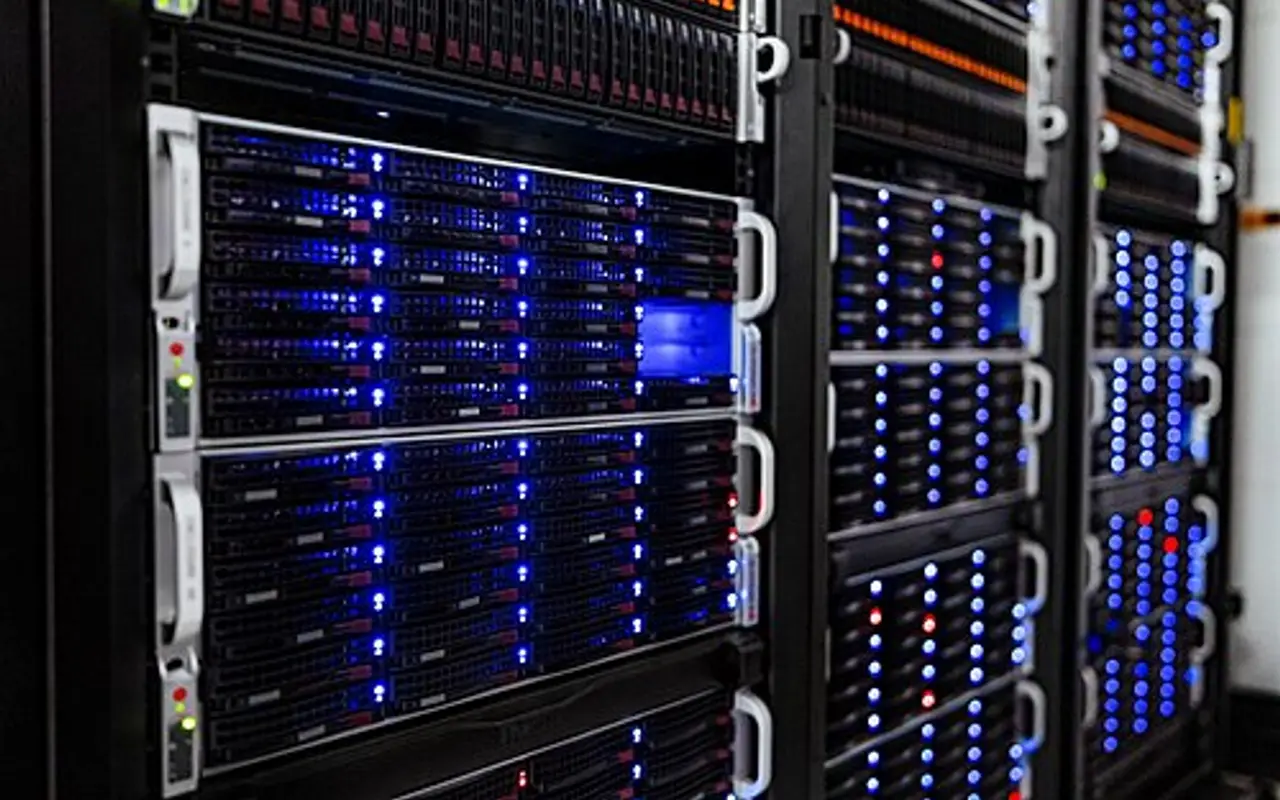
RFQ-018/26 -Supply, installation, configuration, testing & commissioning of CCTV
 Sierra LeoneUNDP Sierra LeoneIT & Telecoms
4 days leftDue 26 Nov 2026
Sierra Leone·Request for proposal11 days left
Published by UNDP Sierra Leone
UNDP Sierra Leone has published a request for proposal in Sierra Leone for: Rfp -firm for agriculture digital public infrastructure (dpi). Responses are due by 3 Dec 2026, 23:59 UTC (11 days left). The contract is financed by the United Nations.
UNDP Sierra Leone seeks a firm, institution or consortium to assess the agriculture digital ecosystem and farmer-registry architecture, design an interoperability architecture, and build and test an MVP for an Agriculture Digital Public Infrastructure use case. The work focuses on the rice value chain in Sierra Leone and supports the Africa Accelerator for Digital Public Infrastructure.
This summary was written by AI from the official notice text. It can miss or misread details. The official notice is the authority.
RFP-021/26 - FIRM FOR AGRICULTURE DIGITAL PUBLIC INFRASTRUCTURE (DPI) TECHNICAL ASSESSMENT, SOLUTION ARCHITECTURE, MVP DEVELOPMENT, TESTING AND DEMONSTRATION. Background: More than 500 million Africans lack a verifiable digital or legal identity, intra-African payments remain among the world's costliest, and the continent holds less than 1% of global data-centre capacity. Digital Public Infrastructure (DPI), foundational digital ID, payments, and trusted data exchange, is the public rail on which inclusive service delivery, AfCFTA trade, citizen-state interaction, and the next generation of African AI applications increasingly depend. The African Union has positioned DPI as a strategic priority through the Digital Transformation Strategy (2020-2030), the Data Policy Framework, the Malabo Convention, the AfCFTA Protocol on Digital Trade, and the Continental AI Strategy (2024) recognising that AI in Africa will deliver inclusive growth only if the underlying DPI is sovereign, interoperable, and rights-based. African readiness to absorb the DPI moment is highly uneven. Fragmented vendor-driven deployments are locking in closed, proprietary stacks that constrain interoperability, accrue economic rents outside national institutions, and entrench digital exclusion of women, youth, and informal workers. Domestic procurement capacity is thin, financing for open foundations is fragmented across vertical donor programmes, and structured peer learning is largely absent. The lock-in compounds twice over: each foreign-controlled DPI deployment today becomes the data tributary feeding foreign-owned AI models tomorrow with African citizen data extracted, foreign-trained models sold back, and the economic value of Africa's data economy accruing outside the continent. The risk is not standstill but generational lock-in: choices made in the next 24-36 months will define both Africa's DPI architecture and the geography of African AI for a generation. UNDP, through the Regional Bureau for Africa (RBA) and the Digital, AI and Innovation Hub (DAI), has co-designed the Africa Accelerator for Digital Public Infrastructure (AA4DPI) under the Regional Programme Document 2026-2029. AA4DPI operates as a catalytic continental facility, strategic advisor, ecosystem orchestrator, safeguards steward, financing architect, and peer-learning hub. AA4DPI is positioned as the DPI substrate for Africa's emerging continental AI investment architecture, providing the sovereign data, identity, and interoperability foundations that Cluster 2 (Data and Interoperability) of the AI 10 Billion Initiative co-anchored by the African Development Bank and the UNDP AI Hub, depends on. By providing the upstream program preparation, technical diagnostics, and robust governance frameworks required by international financiers, the facility converts these sovereign data architectures into fundable, bankable national investment pipelines capable of crowding in parallel public and private capital at scale In Sierra Leone, agriculture represents an important opportunity for the practical application of DPI. Existing and emerging farmer-registry systems create a foundation through which verified farmer information could potentially be connected to agricultural inputs, extension services, financial services, market information, government programmes and other farmer-facing services.
However, realizing this opportunity requires more than the establishment of a standalone farmer database. It requires an assessment of how existing systems are structured, how farmer information is captured and verified, how data can be securely exchanged between authorized institutions, how farmers can be appropriately informed and empowered over use of their data, and how reusable identity and credential mechanisms can support service delivery. UNDP therefore seeks to engage a qualified national or international firm, institution or consortium with demonstrated experience in digital public infrastructure, digital government architecture, systems integration, digital agriculture, software engineering, cybersecurity, responsible data governance and user-centred service design.
Objectives: The overall objective is to assess the existing agriculture digital ecosystem and farmer-registry architecture; identify and validate a priority Agriculture DPI use case; design the corresponding technical and interoperability architecture; develop a functional MVP; conduct user and technical validation; and produce a clear pathway for operationalization and scale-up. 1. Assessment and Ecosystem Mapping Assess existing digital systems relevant to the rice value chain, including the farmer registry and enterprise-support platforms, covering their architecture, data structures, infrastructure, business processes and technical capabilities. Map the institutions, systems and actors that collect, manage, verify, exchange or use information to support rice production, processing, aggregation, marketing and related services. Document priority service journeys for rice farmers and women-owned and women-led rice enterprises, identifying barriers to accessing inputs, extension services, finance, markets and enterprise support that DPI could address. Assess the role of digital identity, secure data exchange, authentication, authorization, consent management and verifiable credentials within the selected rice value-chain service flows. 2. Use-Case Validation and Architecture Design Identify and validate at least one priority Agriculture DPI use case within the rice value chain, in consultation with relevant government institutions, service providers and intended users, with particular attention to women-owned and women-led rice enterprises. Develop the business, functional, data, integration, security and technical architecture for the selected use case. …
Text from the official notice on UNDP Procurement Notices (United Nations). Long notices are shortened here. Read the complete notice at the source.
Public sector opportunities in Sierra Leone, gathered from official procurement publications.
All tenders in Sierra LeoneGuide: How to find international tenders
Keep looking
Sierra LeoneUNDP Sierra LeoneIT & Telecoms
Sierra LeoneUNDP Sierra LeoneConsulting
 KenyaKenya Revenue AuthorityIT & Telecoms
 NorwayAktieselskapet VinmonopoletIT & TelecomsNOK 30M
 IrelandOffice of the Government Chief Information OfficerIT & Telecoms€488,000
IrelandHealth and Social Care Professionals Council (CORU)IT & Telecoms€5,000,000